





Novosanis: What It Is, Colli-Pee & Who Owns It
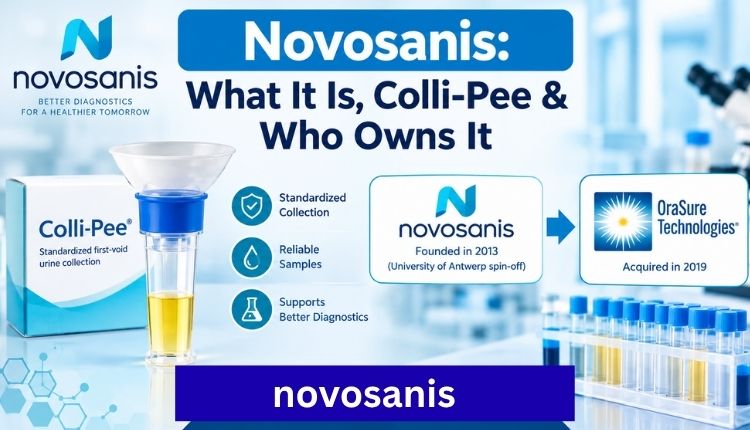
If you’ve searched “Novosanis” expecting to land on a stock ticker page, here’s the short version: Novosanis isn’t a company you can buy shares in directly. It’s a privately held Belgian medtech firm, now a subsidiary of OraSure Technologies, and it’s best known for one product that quietly changed how labs collect urine samples: Colli-Pee.
That mix-up is common enough that it’s worth clearing up early. Readers digging into NVOS stock and Novo Integrated Sciences sometimes stumble onto Novosanis while researching similarly named tickers. The two are unrelated businesses. This article sticks to what Novosanis actually does, who owns it, and why its technology matters in diagnostics.
What Is Novosanis?
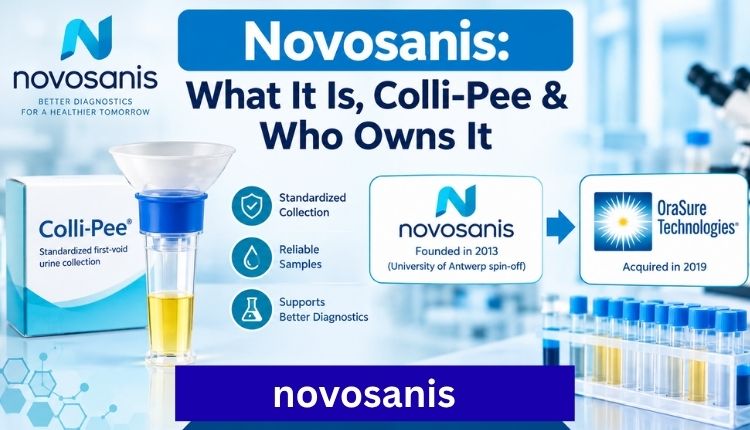
Novosanis was founded in 2013 in Antwerp, Belgium, growing out of research at the University of Antwerp’s Vaccine & Infectious Disease Institute. The company set out to solve a problem that sounds simple but isn’t: getting a clean, consistent, first-void urine sample from a patient without a nurse, a lab visit, or a lot of guesswork.
That research led to Colli-Pee, a self-collection device that captures a precise volume of the very first urine of a void — the portion most likely to carry diagnostically useful material like HPV DNA, other STI markers, and, more recently, cancer biomarkers such as cell-free DNA.
In late 2024, DNA Genotek took over as the legal manufacturer of the Colli-Pee product family, while Novosanis remains the company behind the underlying technology and its continued development.
Company Snapshot
| Detail | Information |
| Founded | 2013, Antwerp, Belgium |
| Origin | Spin-off from the University of Antwerp (VAXINFECTIO / Product Development) |
| Flagship product | Colli-Pee, a first-void urine collection device |
| Parent company | OraSure Technologies, Inc. (NASDAQ: OSUR) |
| Legal manufacturer of Colli-Pee | DNA Genotek (effective December 2024) |
| Core focus | Diagnostics for infectious diseases and oncology |
| Certification | ISO 13485 |
| Notable recognitions | IWT Innovation Award, Henry Van de Velde Award, EU Seal of Excellence (UROSCREEN project) |
Why First-Void Urine Matters
Regular urine cups aren’t great at isolating the fraction of a void that carries the most diagnostic information. First-void urine — literally the first bit that comes out — tends to concentrate certain biomarkers far more than a random midstream sample. Research has repeatedly linked it to better detection rates for HPV and other sexually transmitted infections, and more recent studies have extended that logic into oncology, where urine is increasingly explored as a non-invasive alternative to blood draws for liquid biopsy.
Colli-Pee was built specifically to standardize that collection. It captures a set volume — anywhere from 4 mL to 45 mL, depending on the variant — and can be pre-filled with a preservative that mixes with the sample immediately, protecting DNA, cell-free DNA, or extracellular vesicle RNA from degrading before it reaches the lab.
How Colli-Pee Fits Into Diagnostics and Research
A few use cases explain why labs and researchers adopted the device rather than sticking with a standard cup:
- STI and HPV screening: First-void urine improves detection of HPV and related infections compared with conventional sampling, and it’s non-invasive enough to support home-based or self-collection screening programs.
- Oncology research: Working with sister company DNA Genotek, Novosanis developed a preservation chemistry (branded UAS) aimed at stabilizing extracellular vesicle RNA and cell-free DNA in urine — materials researchers use to study tumor biology without a biopsy.
- Multiomics and biomarker discovery: The larger-volume Colli-Pee variants support studies that need more material to work with, which matters as researchers look for new biomarkers beyond the ones already validated.
None of this happened in isolation. Novosanis built its research pipeline through partnerships with academic groups, diagnostic labs, and pharmaceutical collaborators, and its integration under OraSure Technologies gave it access to broader distribution and manufacturing infrastructure it wouldn’t have had as a standalone startup, visit more.
Ownership: Where Novosanis Sits Today
Novosanis operates as a wholly owned subsidiary of OraSure Technologies, Inc., a publicly traded diagnostics company listed on NASDAQ under OSUR. That’s a distinct structure from companies like Novo Integrated Sciences, whose ticker (NVOS) shares a superficial resemblance to the “Novosanis” name and causes some of the search confusion mentioned earlier. If you’re actually researching the NVOS ticker rather than the biotech company, our comprehensive overview of Novo Integrated Sciences and the NVOS stock forecast for 2026 are better starting points, and the breakdown of NVOS’s reverse split history covers corporate actions specific to that company.
Because Novosanis sits inside OraSure rather than trading on its own, there’s no separate “Novosanis stock” to track. Investors interested in the business exposure would be looking at OraSure Technologies’ public filings instead.
Recognition and Regulatory Track Record
Novosanis has picked up a handful of awards that reflect more design credibility than most medtech startups manage in a decade: the IWT Innovation Award for major social relevance, the Henry Van de Velde Award for healthcare design, and a Seal of Excellence from the European Commission for its UROSCREEN cervical cancer screening proposal. On the regulatory side, the company holds ISO 13485 certification, and Colli-Pee UCM has CE-IVD marking along with registrations in several countries outside Europe.
None of that guarantees commercial success, but it does suggest the underlying device engineering and quality systems were taken seriously from early on — which matters in a field where regulatory missteps can stall a product for years.
Frequently Asked Questions
Is Novosanis a publicly traded company?
No. Novosanis is privately held and operates as a wholly owned subsidiary of OraSure Technologies, Inc. (NASDAQ: OSUR). There is no separate stock ticker for Novosanis itself.
Is Novosanis related to Novo Integrated Sciences (NVOS)?
No. The similarity is in the name only. Novosanis is a Belgian diagnostics company under OraSure Technologies, while Novo Integrated Sciences is a separate healthcare company trading under the ticker NVOS. Readers researching that ticker specifically may find our NVOS stock overview more relevant.
What is Colli-Pee used for?
Colli-Pee is a urine collection device designed to capture first-void urine — the fraction most useful for detecting HPV, other sexually transmitted infections, and certain cancer biomarkers. It’s used in clinical screening programs and research settings, including oncology and liquid biopsy studies.
Who manufactures Colli-Pee now?
As of December 2024, DNA Genotek became the legal manufacturer of the Colli-Pee product family. Novosanis continues to develop the underlying technology.
Where is Novosanis based?
Novosanis is headquartered in Antwerp, Belgium, and grew out of research conducted at the University of Antwerp.
Can Colli-Pee be used for cancer detection?
It’s used in cancer research rather than as a standalone diagnostic test for cancer itself. Novosanis and DNA Genotek developed a preservation chemistry to stabilize cell-free DNA and extracellular vesicle RNA in urine, which researchers use to study tumor biomarkers as part of liquid biopsy approaches.
Conclusion
Novosanis is a good example of a company built around one specific, well-solved problem: getting a clean, standardized urine sample without the mess and unreliability of a regular cup. That focus took it from a University of Antwerp research project to an ISO-certified device maker under OraSure Technologies, with its Colli-Pee platform now used in STI screening and oncology research programs internationally.
It’s not a stock you can buy, and it’s not connected to Novo Integrated Sciences despite the naming coincidence. If your search for “Novosanis” was really about NVOS the ticker, the NVOS stock analysis hub has the price data, forecasts, and sentiment coverage you’re likely after. If you came here for the biotech company itself, this covers what it does, who owns it, and why first-void urine collection has become a bigger deal in diagnostics than most people realize.