




Ozempic Dosing Chart: Weekly Doses, Pens & Schedule
An Ozempic dosing chart shows how the weekly semaglutide injection steps up over time. It starts at 0.25 mg and can rise to 2 mg, depending on blood sugar control and how well the person tolerates it. This guide covers the schedule, the pens, missed doses and common questions in plain language. Your own plan always comes from your prescriber.
If you want background on the drug first, see who makes Ozempic. It’s made by Novo Nordisk, and the company is covered at Novo Nordisk: Wegovy, Ozempic, Stock & Latest News.
What Is Ozempic and Who Is It For?
Ozempic is a once-weekly injection of semaglutide. In the US it’s approved for adults with type 2 diabetes, as an add-on to diet and exercise. It’s also approved to lower certain cardiovascular and kidney risks in people with type 2 diabetes. It isn’t for type 1 diabetes.
Many people mix it up with Wegovy, which is a separate brand of semaglutide with its own dosing schedule and a weight-management label. This chart covers Ozempic only. If you want to see where each product sits in the company’s lineup, the Novo Nordisk stock update gives the business side, visit more.
Ozempic Dosing Chart (Injection Pens)
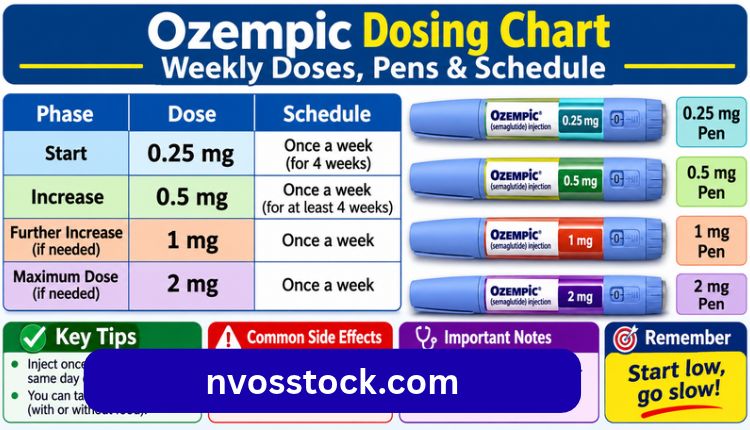
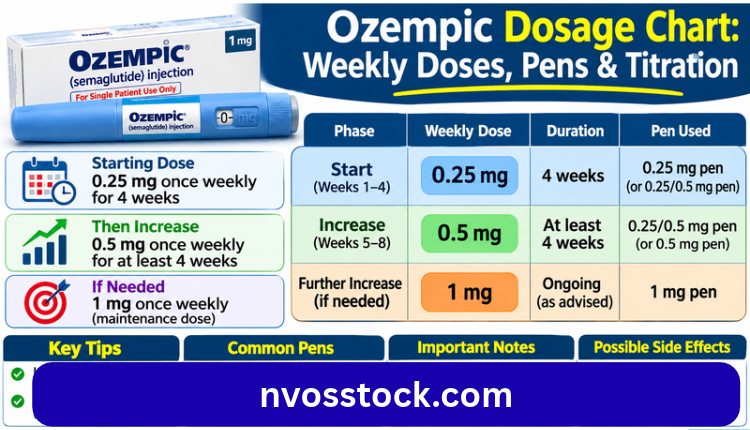
This is the standard escalation path from the US prescribing information.
| Step | Timing | Weekly dose | What it’s for |
| 1. Starter | Weeks 1 to 4 | 0.25 mg | Helps your body adjust. Not meant for blood sugar control |
| 2. First maintenance | Week 5 onward | 0.5 mg | First dose expected to lower blood sugar |
| 3. Increase | After at least 4 weeks on 0.5 mg | 1 mg | If more glucose control is needed |
| 4. Maximum | After at least 4 weeks on 1 mg | 2 mg | Highest recommended dose |
A few things to notice. The jump from one step to the next is never faster than every four weeks. Not everyone moves up the chart, and plenty of people stay at 0.5 mg or 1 mg for good. For adults with type 2 diabetes and chronic kidney disease, the label’s recommended maintenance dose is 1 mg.
Ozempic Pen Sizes and Doses
The pen label causes more confusion than the schedule does. A pen marked “2 mg” does not deliver a 2 mg dose. It holds 2 mg of medicine in total.
| Pen | Total in pen | Dose per injection | Typical use |
| Starter and low-dose pen | 2 mg / 3 mL | 0.25 mg or 0.5 mg | Weeks 1 to 4, then 0.5 mg |
| Mid-dose pen | 4 mg / 3 mL | 1 mg | Step up from 0.5 mg |
| High-dose pen | 8 mg / 3 mL | 2 mg | Maximum dose |
Pen colors usually differ by strength (red, blue and yellow are common), but always read the label rather than trusting color alone. The first pen you receive typically holds four 0.25 mg doses and two 0.5 mg doses. Later pens at 0.5 mg, 1 mg or 2 mg hold four doses each, which is about a month.
Newer labeling may list additional forms, such as single-dose syringes or tablets, which follow different schedules. This chart applies to the injection pens. If you were prescribed a different form, use the chart that came with it.
How to Read Your Own Ozempic Dosing Chart
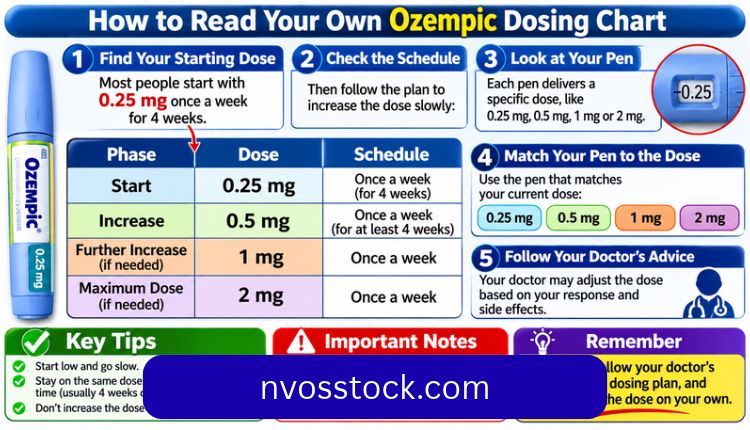
Your personal schedule might not match the standard table. Prescribers adjust based on:
- Blood sugar readings and A1C
- Side effects, especially nausea and vomiting
- Other medicines, including insulin and sulfonylureas, which can raise low blood sugar risk
- Kidney health and other conditions
Write your start date on a calendar, mark each injection day, and note the date you change pens. That small habit prevents most dosing mistakes.
Missed Doses and Injection Day
Per the labeling, if you miss a dose, take it as soon as you remember, as long as it’s within 5 days of the missed dose. If more than 5 days have passed, skip it and take the next dose on your regular day. Don’t double up. You can change your injection day, but keep at least 2 days (more than 48 hours) between doses.
Storage matters too. Keep unused pens in the fridge. After first use, a pen can be kept in the fridge or at room temperature for up to 56 days.
Common Side Effects at Each Dose Change
Nausea, diarrhea, vomiting, constipation and stomach pain are the most common complaints, and they tend to show up when the dose goes up. That’s the reason for the slow four-week steps. The label also carries a boxed warning about thyroid C-cell tumors seen in rodents. Call your doctor promptly if you notice severe stomach pain, a lump in the neck, trouble swallowing, or signs of an allergic reaction.
Why Dosing Questions Show Up in Market News
Ozempic is one of the biggest products in the GLP-1 category, so dosing, supply and pricing news can move investor attention. If you follow that side of things, the NVO stock guide covers price drivers and risks. New to tickers in general? Start with Stock Stock: Ticker Guides, Price Checks & Research Tips. This article is health information only, not investment advice.
FAQs About the Ozempic Dosing Chart
What is the starting dose of Ozempic?
The starting dose is 0.25 mg once a week for four weeks. After that, the dose moves to 0.5 mg weekly.
What is the maximum Ozempic dose?
The maximum recommended dose is 2 mg once weekly, and only after at least four weeks at 1 mg.
Does the 0.25 mg dose work for blood sugar?
Not really. The label describes 0.25 mg as a starter dose to help you adjust, not a dose intended for glucose control.
How often can the dose be increased?
No more often than every four weeks, and only if your prescriber decides it’s needed.
Is Ozempic dosed differently for weight loss?
Ozempic isn’t approved for weight loss. Wegovy is the semaglutide brand labeled for that, with its own schedule. Talk to your prescriber about which product fits your situation.
What should I do if I miss a dose?
Take it within 5 days of the scheduled day. Past 5 days, skip it and resume your normal schedule.
Can I change my dose on my own?
No. Changing doses without guidance can cause side effects or leave your diabetes poorly controlled.
Conclusion
The Ozempic dosing chart is simple at its core: 0.25 mg for four weeks, then 0.5 mg, with optional steps to 1 mg and 2 mg no faster than every four weeks. The part that trips people up is the pens, since the number on the box is the total in the pen, not your dose. Follow your prescriber’s plan, keep a calendar, and ask your pharmacist if a pen label doesn’t match what you were told. For more on the company behind the drug, browse Novo Nordisk and the health category on nvosstock.com.