





Stocktwtis: What It Is & How It Works

Typed “stocktwtis” into Google and landed here by accident? You’re not alone. It’s one of the most common typos for StockTwits, the social platform where traders and investors swap ideas on stocks, crypto, and everything in between. This guide clears up the confusion, walks through what the real platform does, and shows you how to use it without getting swept up in the noise.
Stocktwtis Is Just a Misspelling of StockTwits
There’s no separate site, app, or company called “stocktwtis.” It’s simply a typo people make when their fingers move faster than their brain, swapping the “i” and the “t” near the end of the word. If you were searching for stock sentiment, trending tickers, or trader chatter, StockTwits is the platform you actually want.
StockTwits launched in 2009 and built its whole identity around the “cashtag,” a dollar sign plus a ticker symbol, like $AAPL or $TSLA. Tag a post with a cashtag and it joins a live stream of everything the community is saying about that stock. It works a bit like Twitter/X, except every conversation is anchored to a specific company, ETF, or coin instead of a hashtag.
What You Can Actually Do on StockTwits
The platform isn’t just a feed of hot takes. A few features make it genuinely useful if you know where to look:
- Cashtag streams: real-time posts tagged to a specific ticker, so you can see what traders are saying about a stock right now
- Bullish/bearish sentiment meter: a running tally of how the crowd feels about a given ticker
- Trending and Most Active lists: tickers getting an unusual spike in mentions or volume
- Watchlists: track your own basket of stocks and crypto in one place
- Earnings calendar: upcoming reports with live call access on some tickers
- News aggregation: headlines pulled in next to the chatter, so context isn’t far away
None of this replaces actual research. It’s closer to a pulse check: a fast way to see what the crowd is focused on before you dig into filings, price action, or a company’s fundamentals yourself, visit more.
Common Misspellings People Search Instead of “StockTwits”
If “stocktwtis” got you here, you’re in good company. Here’s how the misspellings usually break down.
| Common Typo | What People Actually Mean |
| stocktwtis | StockTwits |
| stocktwit | StockTwits (singular) |
| stock twits | StockTwits |
| stocktwits.com | The official StockTwits website |
| stocks twitter | StockTwits (confusing it with X/Twitter) |
| stocktweets | StockTwits |
Search engines are pretty forgiving about typos these days, but if you want to bookmark the platform correctly, the spelling is one word: StockTwits.
How Traders Use Stocktwits Sentiment in Practice
Sentiment data gets a lot of attention because it’s easy to read at a glance, green for bullish, red for bearish, with a percentage attached. The catch is that sentiment reflects mood, not analysis. A ticker can flip from 80% bullish to 40% bearish in a single trading session if a rumor spreads or a headline drops, and that swing tells you nothing about whether the underlying business actually changed.
A more useful approach is to treat StockTwits as one input among several:
- Check the sentiment and message volume for context, not conviction
- Cross-reference any claims against the company’s actual filings or press releases
- Watch for coordinated posting patterns, especially on low-float or micro-cap tickers, since these are frequent targets for pump-and-dump chatter
- Use the platform to spot what’s trending, then do your own homework before acting on it
This matters most with small, thinly traded stocks. Names like TRKAQ on Stocktwits, KeyCorp sentiment on Stocktwits, and Genius Group discussion on Stock Twits can see sentiment swing hard on relatively little real news, simply because a smaller number of posts can move the needle. If you’re tracking a specific ticker’s chatter and price action together, it helps to check dedicated breakdowns rather than relying on the raw sentiment number alone.
StockTwits: Pros and Cons
| Pros | Cons |
| Real-time pulse on what traders are discussing | Sentiment can be manipulated on low-volume tickers |
| Cashtag system makes it easy to follow a specific stock | Quality of posts varies wildly, some users have no track record |
| Free to use, with an optional paid tier for extras | Easy to mistake noise for signal, especially during volatile sessions |
| Good for spotting emerging trends before mainstream coverage | Not a substitute for fundamental or technical research |
| Mobile and web apps, so it’s easy to check on the go | Herd mentality can push people into decisions they’d otherwise skip |
Stocktwits vs. Traditional Financial News
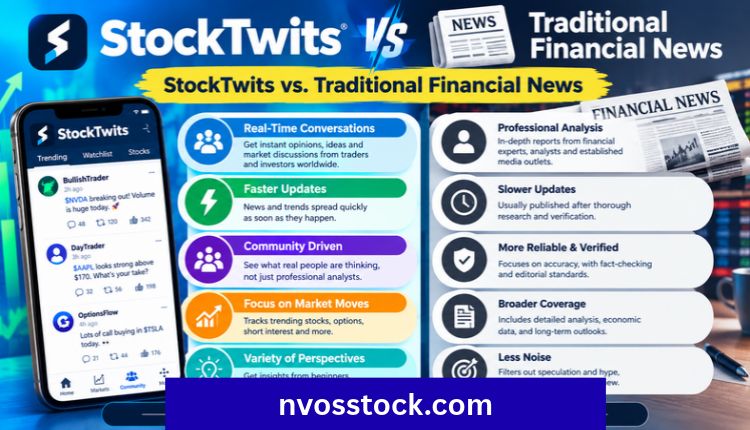
Traditional outlets report on what already happened, earnings beats, guidance changes, analyst upgrades. StockTwits captures the reaction as it unfolds, often before a headline is even written. That speed is the appeal, but it’s also the risk. A post claiming a company is about to be acquired can spread through a cashtag stream in minutes, and by the time anyone verifies it, the stock has already moved. Treat anything you read there as a lead worth checking, not a conclusion worth trading on.
If you’re researching a specific company’s stock activity alongside its social sentiment, it’s worth pairing that with dedicated coverage. For example, readers following Novo Integrated Sciences often check NVOS price updates alongside NVOS stock forecasts and community threads on NVOS stock Reddit discussions, rather than judging the stock off a single sentiment gauge.
Tips for Using StockTwits Without Getting Burned
A few habits separate traders who use the platform well from those who get whipsawed by it:
- Follow a mix of accounts, not just the loudest ones. High follower counts don’t equal accuracy.
- Pay attention to message volume spikes, not just the sentiment percentage. A ticker with 40 posts and 90% bullish sentiment means less than one with 4,000 posts split evenly.
- Never treat a single post as investment advice, even if it’s confident or detailed.
- Use watchlists to track tickers over time instead of reacting to whatever’s trending that hour.
- Remember that anonymous accounts have no accountability if they’re wrong.
Getting Started on StockTwits in Five Minutes
Setting up an account takes less effort than most people expect:
- Sign up with an email address or connect through Google or Apple
- Pick a username and add a short bio, this helps other traders know your background or focus
- Search a few tickers you already follow and hit “Watch” to build your first watchlist
- Scroll the sentiment meter and Trending tab for a day or two before posting anything yourself
- Follow a handful of accounts that post actual reasoning, not just price targets, and mute the rest
Once you’re set up, the real skill is knowing which streams to trust. A ticker with heavy retail attention, like the ones covered in pieces on NVOS Stocktwits sentiment, TRKAQ share activity, or TSLY Stocktwits chatter, tends to attract more noise than a large-cap name simply because fewer posts are needed to shift the mood. Smaller names like CDIO’s stock forecast show the same pattern: a handful of active posters can make sentiment look more decisive than the actual trading volume supports.
Frequently Asked Questions
Is “stocktwtis” a real website?
No. It’s a common misspelling of StockTwits, the social platform for stock and crypto discussion built around cashtags like $AAPL.
Is StockTwits free to use?
Yes, the core platform is free. There’s also a paid Premium tier with extra charting and data features for active traders.
Can I trust the sentiment scores on StockTwits?
Treat them as a snapshot of crowd mood, not a forecast. Sentiment can be skewed on thinly traded stocks where a handful of posts shift the percentage significantly.
Is StockTwits the same as Twitter/X?
No, though the format looks similar. StockTwits is built exclusively for financial discussion and organizes everything by cashtag rather than hashtag.
How do I find discussion on a specific stock?
Search the ticker with a dollar sign, like $NVOS or $TSLA, and you’ll land on that stock’s dedicated stream with sentiment, trending posts, and recent news.
Does StockTwits give investment advice?
No. It’s explicitly a discussion and data platform. Nothing posted there constitutes personalized financial advice, and the platform says as much in its own terms.
Conclusion
If you typed “stocktwtis,” what you were really after is StockTwits, the go-to hub for real-time stock and crypto sentiment, cashtag streams, and trader discussion. It’s a genuinely useful tool for spotting what the market’s paying attention to right now, but it works best as a starting point rather than a final answer.
Cross-check the chatter against real filings, price data, and your own judgment before making a move, especially on volatile or low-float names where a handful of loud posts can swing the sentiment score without any real news behind it.