




TRKAQ Stock: What Happened to Troika Media Group Shares?
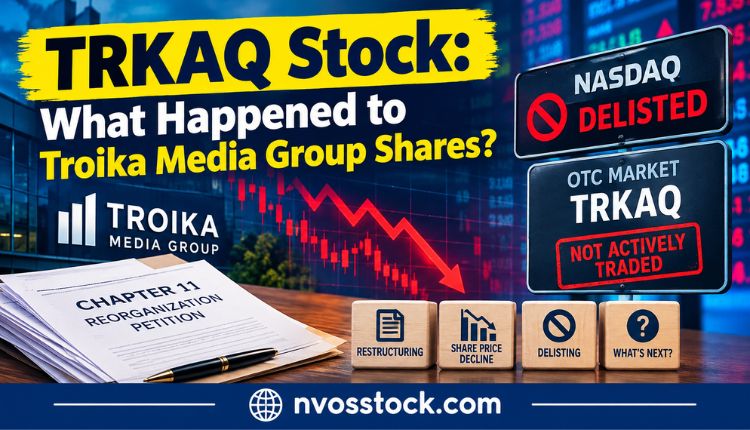
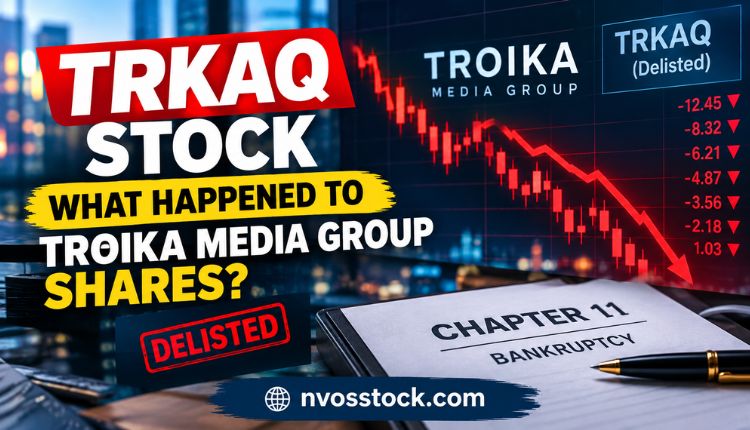
If you searched for TRKAQ stock hoping to find a normal quote page, the first thing you should know is that this ticker does not belong to an active, healthy company anymore. TRKAQ is the post-bankruptcy ticker for Troika Media Group, a New York-based marketing and consumer engagement firm that filed for Chapter 11 protection in December 2023 and was later delisted from Nasdaq. What remains today is an over-the-counter shell that trades on scraps of speculation rather than fundamentals.
This guide walks through what Troika Media Group actually did, why its ticker changed from TRKA to TRKAQ, how the bankruptcy played out, and what the “Q” at the end of a ticker really tells an investor. If you already hold shares, or you are simply curious why this symbol keeps showing up in penny stock forums, the details below should answer most of your questions.
What Was Troika Media Group?
Troika Media Group, Inc. was a professional services company built around three main pillars: brand building and creative work, marketing technology, and performance-based customer acquisition. The business grew mostly through acquisitions, buying up smaller agencies and folding them into a single platform aimed at large consumer brands. On paper, revenue looked substantial, reaching into the hundreds of millions of dollars in its final full year. Underneath that top line, though, the company was carrying heavy debt from those same acquisitions, and profitability never caught up.
That mismatch between debt load and cash flow is what eventually forced the company’s hand.
Why the Ticker Changed From TRKA to TRKAQ
When a company files for Chapter 11 bankruptcy, exchanges and data providers typically append a “Q” to the end of the original ticker. It is a standard flag used across US markets, not something unique to Troika. So TRKA became TRKAQ the moment bankruptcy proceedings began, and that single letter carries real meaning: it tells any investor looking at a stock screener that the company is in, or has recently been in, bankruptcy court.
Nasdaq followed up shortly after with a delisting notice. The exchange cited the bankruptcy filing itself, concerns about what remained of shareholder equity, and Troika’s inability to keep meeting listing standards. The company did not appeal. Trading was suspended in mid-December 2023, and the stock moved to over-the-counter markets, which is where TRKAQ has traded ever since.
The Bankruptcy and Liquidation Timeline
Troika and twelve affiliated entities filed for Chapter 11 in the Southern District of New York in December 2023. As part of that filing, the company disclosed a sale of its assets to its senior lender, Blue Torch Finance, through what is known as a stalking horse credit bid. In plain terms, the lender used the debt it was already owed as its “bid” for the business, rather than paying fresh cash.
That structure matters a great deal for anyone holding TRKAQ shares, because it defines exactly where common stockholders sit in the pecking order. Secured lenders get paid first. Unsecured creditors come next. Common equity holders are last, and in most Chapter 11 liquidations, there simply isn’t anything left by the time their turn comes.
The bankruptcy court confirmed Troika’s plan of liquidation in late March 2024, and the plan became effective on April 1, 2024. From that point forward, Troika Media Group has operated as a private, wound-down entity, and the publicly traded shares that still change hands under TRKAQ represent a claim on a company that, for practical purposes, no longer exists in its old form.
TRKAQ Stock: Key Facts at a Glance
| Detail | Information |
| Company | Troika Media Group, Inc. |
| Current ticker | TRKAQ |
| Former ticker | TRKA (Nasdaq) |
| Exchange today | OTC Markets |
| Bankruptcy filed | December 7, 2023 |
| Nasdaq delisting | December 18, 2023 |
| Liquidation plan effective | April 1, 2024 |
| Stock split history | 1-for-25 reverse split, June 2023 |
| Headquarters | New York, New York |
| Business focus | Marketing, brand consulting, customer acquisition |
Figures on price and volume change by the day and are best checked directly on a live quote source, since TRKAQ now trades thinly and can swing sharply on very little volume.
Why TRKAQ Still Trades at All
A reasonable question is why a bankrupt, delisted company still has a ticker that moves at all. Part of the answer is mechanical: OTC markets allow shares of companies in bankruptcy or liquidation to keep trading unless a regulator specifically halts them. Part of it is behavioral. Penny stock traders sometimes chase tickers precisely because they are cheap and volatile, hoping for a short squeeze or a speculative bounce, even when the underlying business has no path back to solvency, visit more.
Neither of those reasons has anything to do with Troika’s actual financial health. The company’s own statistics tell a blunt story: revenue in the hundreds of millions paired with tens of millions in losses, negative operating cash flow, and a debt load that outweighed cash on hand by a wide margin. An Altman Z-Score deep in negative territory, the kind of metric used to flag bankruptcy risk, only confirms what the Chapter 11 filing already made clear.
What the “Q” Suffix Really Means for Investors
TRKAQ is a useful case study for a broader lesson: ticker suffixes are not decoration. A “Q” appended to a symbol is one of the clearest warning labels the US market gives retail investors, short of an outright trading halt. It shows up automatically once a company enters bankruptcy proceedings, and it tends to stick around until the case resolves, whether that means reorganization, a sale, or liquidation.
For a growing consumer brand, a similar kind of caution shows up in other forms. A company undergoing a reverse split, for instance, is often trying to prop up a share price that fell too far, and that pattern is worth understanding on its own terms if you follow small caps regularly. The mechanics are different from a bankruptcy suffix, but the underlying message to shareholders is the same: pay close attention to what triggered the change, not just the change itself.
Lessons From Troika’s Collapse
A few threads run through the TRKAQ story that apply well beyond this one ticker.
Acquisition-driven revenue growth can hide unprofitability for a long time. Troika’s topline numbers looked healthy right up until the debt used to fund that growth became unmanageable. Investors who focus only on revenue trends, without checking free cash flow and debt levels, can miss the warning signs entirely.
Ticker changes and exchange notices are signals, not noise. The move from TRKA to TRKAQ, followed by the Nasdaq delisting notice, gave the market a clear timeline of distress months before the liquidation plan was finalized.
Common equity is the last claim in a bankruptcy, and it is frequently worth nothing. The stalking horse credit bid structure used in Troika’s sale is common in these situations precisely because it lets a secured lender recover value first, leaving little or nothing for shareholders further down the line.
If you’re researching other small caps with their own volatility and sentiment swirl, it’s worth reading how traders discuss names like NVOS on Stocktwits or checking a current NVOS stock forecast for a sense of how speculative chatter compares against the underlying fundamentals. The same discipline that would have flagged Troika’s debt problem early applies just as well to any thinly traded stock making the rounds on social media.
Is TRKAQ a Buy?
Based on everything above, TRKAQ is not a stock in the traditional sense of a company you’re betting will grow. The business that issued these shares has completed its liquidation, its assets went to a secured lender through a credit bid, and Nasdaq removed it from the exchange for reasons directly tied to the bankruptcy. Any trading that still happens in TRKAQ on OTC markets is speculative by nature, and the historical pattern for common equity in a completed Chapter 11 liquidation is that it ends up worth little to nothing.
Anyone still holding shares, or considering buying them, should treat this as a case where the fundamental research has already been done by the bankruptcy court. The plan is confirmed, the effective date has passed, and the priority of claims is public record.
FAQs About TRKAQ Stock
What company does TRKAQ stock represent?
TRKAQ is the ticker for Troika Media Group, Inc., a marketing and consumer engagement company formerly listed on Nasdaq under TRKA.
Why did TRKA become TRKAQ?
The “Q” was added automatically once Troika filed for Chapter 11 bankruptcy in December 2023. Exchanges use this suffix to flag companies in bankruptcy proceedings.
Is TRKAQ still listed on Nasdaq?
No. Nasdaq suspended trading and delisted the stock in December 2023, and TRKAQ has traded over-the-counter since then.
What happened in Troika’s bankruptcy case?
Troika filed Chapter 11 in December 2023, agreed to sell its assets to lender Blue Torch Finance through a stalking horse credit bid, and had its liquidation plan confirmed by the bankruptcy court, with an effective date of April 1, 2024.
Are TRKAQ shares worth anything now?
Common shareholders sit last in line during a bankruptcy liquidation, behind secured and unsecured creditors. In Troika’s case, the credit bid structure means there is little to no residual value expected for common equity holders.
Can TRKAQ still be traded?
Shares can still change hands on OTC markets, since regulators have not halted trading outright. That does not reflect any change in the company’s underlying financial position.
Conclusion
TRKAQ stock is less an investment opportunity than a record of how quickly a debt-heavy growth story can unravel. Troika Media Group’s acquisitions built a large revenue base but an even larger pile of obligations, and once cash flow couldn’t keep pace, Chapter 11, a Nasdaq delisting, and a credit-bid sale followed in rapid succession. The stock that still trades under this ticker today is a leftover of that process, not a path back to it.
For traders who follow distressed and small-cap tickers, TRKAQ is worth knowing as a reference case rather than a position to build. If you’re weighing other volatile small caps, it’s worth applying the same scrutiny you’d give any bankruptcy filing, starting with debt levels, cash flow, and exchange notices, well before a ticker ever picks up a “Q.”