





PGY Stocktwits: What Pagaya’s Retail Sentiment Really Shows

If you’ve typed “PGY Stocktwits” into Google in the last few months, you’re not alone. Pagaya Technologies (NASDAQ: PGY) has turned into one of those stocks where the chatter moves almost as fast as the share price, and the Stocktwits sentiment meter has swung from bearish to “extremely bullish” and back again within a matter of days more than once this year.
That volatility is exactly why the search term exists. People aren’t just curious about Pagaya’s fundamentals; they want to know what the crowd is thinking right now, before they decide whether to buy, sell, or just watch from the sidelines. This post breaks down what PGY Stocktwits data actually shows, how to read it without getting fooled by it, and where it fits alongside the fundamentals.
A Quick Word on Pagaya (PGY)
Pagaya Technologies is an AI-driven lending infrastructure company. It doesn’t lend money directly to consumers. Instead, it plugs its underwriting models into banks, fintechs, and auto lenders so those partners can approve more loans without taking on more risk than they’re comfortable with. Think of it as the data layer sitting behind other people’s lending decisions.
The company has been through a rough stretch and a decent recovery in the same twelve months. Shares fell more than 30% at one point this year, then rallied over 20% in a single session after Pagaya raised its full-year guidance and reported wider partner adoption. That kind of swing is a big part of why the stock draws so much retail attention, and why so many traders check the sentiment feed before they check anything else.
Why People Search “PGY Stocktwits” Specifically
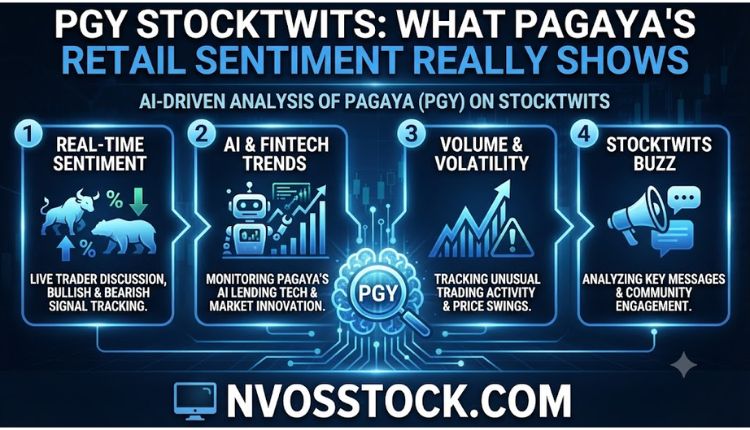
Stocktwits isn’t a research tool in the traditional sense. It’s closer to a live pulse check on how retail traders are feeling about a stock at this exact moment. For a name like PGY, that pulse check tends to move faster than the news cycle. A single earnings beat, a CFO change, or a new asset-backed securitization deal can flip the mood from bearish to bullish inside a day.
People search the term for a few reasons:
- They want to gauge whether retail sentiment lines up with their own read on the stock, or whether they’re about to buy into a crowd that’s already euphoric (or already panicking).
- They’re tracking message volume as a proxy for attention. A sudden spike in posts usually means something happened, even before the headline shows up elsewhere.
- They’re comparing sentiment against price action to spot divergences, like a stock grinding lower while chatter stays upbeat, which can be a signal worth investigating further.
How the Stocktwits Sentiment Meter Actually Works
The sentiment score on a symbol’s Stocktwits page runs from 0 to 100 and is built entirely from how users tag their own posts, either bullish or bearish. Anything sitting in the low range points to fear, the middle band reads as neutral, and the high end signals greed. There’s a separate message volume score alongside it, running from “extremely low” to “extremely high,” which just measures how much chatter a stock is generating relative to its own normal baseline.
Both numbers reset and recalculate constantly, so what you see checking in the morning can look completely different by the afternoon. That’s useful, but it’s also the trap. A sentiment score is a snapshot of mood, not a forecast, and it says nothing about whether the crowd is actually right.
What PGY’s Sentiment Has Looked Like Recently
Pagaya’s Stocktwits feed has been anything but stable this year. Retail sentiment jumped to “extremely bullish” territory after the company’s preliminary second-quarter figures came in ahead of expectations, with message volume spiking sharply in the following 24 hours. A few months later, after Pagaya lifted its full-year guidance and named a new CFO, sentiment flipped again, this time from bearish back to bullish, even though the stock had been down more than 30% for the year up to that point.
More recently, an analyst upgrade highlighting Pagaya’s discount valuation against fintech peers pushed sentiment from bearish to neutral, with message volume jumping several-fold in a single day. Users on the platform were split, some calling out a near-term price target, others simply saying it looked like a good entry point ahead of the next earnings report.
That back-and-forth is the pattern to notice. PGY’s retail crowd tends to react hard to headlines (guidance changes, securitization deals, executive moves) and then cool off just as quickly once the news is priced in. If you’re watching the feed, expect noise, not a clean trend line.
What’s Actually Driving the Sentiment Swings
A few recurring themes keep showing up whenever PGY’s sentiment moves:
Guidance updates: Every time Pagaya has revised its full-year net income or revenue outlook, sentiment has moved with it, sometimes before the broader market fully digests the numbers.
Securitization deals: Pagaya funds a large share of its loan volume through asset-backed securities. Each new or upsized ABS deal (auto loans, personal loans, and so on) tends to get read as a vote of confidence from institutional investors, and retail sentiment often follows.
Leadership changes: The CFO transition earlier this year moved the needle, partly because it came bundled with the guidance raise, and partly because management changes at a company this reliant on investor trust always get scrutinized.
Analyst calls: Price target changes and rating updates, especially ones pointing out a valuation gap against peers like SoFi, Upstart, or other fintech names, show up in the sentiment data almost immediately.
Should You Actually Trade Off PGY Stocktwits Sentiment?
Here’s my honest take: sentiment data is a mood ring, not a compass. It tells you how a crowd feels, and crowds are frequently wrong at extremes, which is part of why “extremely bullish” readings sometimes show up right before a pullback, and “extremely bearish” readings sometimes show up right before a bounce.
That doesn’t mean it’s useless. Watching message volume spike is a decent early warning that something’s happening with a stock, even before you know what. And a sentiment score that’s badly out of sync with the price action (bullish sentiment on a stock that keeps sliding, for instance) is worth a second look. But none of that replaces reading the actual earnings report, checking the guidance numbers, or understanding how a company like Pagaya makes money in the first place.
If you’re going to use Stocktwits at all, treat it as one input among several, not the deciding factor.
Where PGY Fits Among Other Heavily Discussed Tickers
Pagaya isn’t the only stock where retail sentiment moves the conversation more than the fundamentals do. If you’re building a habit of checking crowd sentiment before you trade, it’s worth doing the same homework on other names that show up constantly in retail chatter. We’ve covered a few of them in detail, including NVOS stock on Stocktwits, GNS Stocktwits sentiment, and TSLY Stocktwits activity, along with a rundown of how Stocktwits CDIO discussions tend to play out.
If your interest in PGY stems from the broader fintech and healthcare-adjacent lending space, our pieces on the Novo Nordisk stock forecast and the Ozempic stock symbol cover a similar dynamic: high retail interest, fast-moving sentiment, and a stock story that’s bigger than any single earnings print.
Quick FAQ
What does a “bullish” or “bearish” tag mean on Stocktwits?
It’s a self-reported label users attach to their own posts about a stock. Stocktwits aggregates those tags into the sentiment score; it isn’t an algorithm judging the stock independently.
Why does PGY’s sentiment change so fast?
Because the stock is genuinely volatile and news-driven, guidance updates, securitization deals, and leadership changes all land with retail traders quickly, and the sentiment meter reflects that in near real time.
Is high message volume a bullish sign?
Not by itself. It just means more people are talking about the stock right now. That can accompany good news or bad news, so check what’s actually driving the spike before concluding. know more, click here.
Should I buy or sell PGY based on Stocktwits sentiment?
No single sentiment reading should drive a trade decision. Use it alongside earnings data, guidance, and your own risk tolerance, not instead of them.
Final Thought
PGY Stocktwits sentiment is a useful weather vane for how retail traders are feeling about Pagaya at any given moment, but it’s changed direction enough times this year that anyone treating it as gospel has probably been burned at least once. Check the mood, sure, but read the guidance numbers and the actual news behind the swing before you act on it.