



VENG Stock Price Target: What Analysts Actually Say
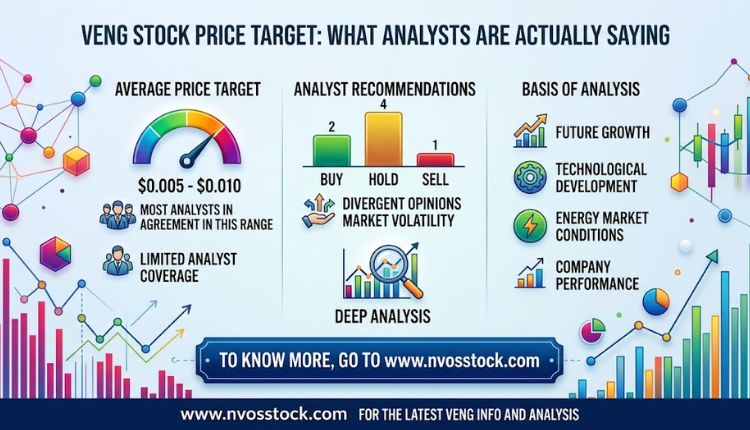
Search “VENG stock price target” and you’ll find calculators, forecast widgets, and AI-generated tables promising a number. Here’s the problem: for VENG (Vision Energy Corporation), that number doesn’t really exist. No major bank or research firm currently publishes a 12-month price target for this stock, and there’s a specific reason why.
This piece explains what VENG is, why standard price target coverage has dried up, what the price history actually looks like, and how to evaluate a stock like this on your own when Wall Street analysts aren’t doing it for you.
What Is VENG Stock?
VENG is the OTC ticker for Vision Energy Corporation, a Jersey City, New Jersey company originally focused on low-carbon energy infrastructure. It used to trade as Vision Hydrogen Corporation under the symbol VIHD before the company rebranded and switched to VENG in December 2022.
Since then, the stock has gone through a reverse split, a “Caveat Emptor” flag from OTC Markets (later removed), and, more recently, an SEC administrative proceeding tied to severely delinquent financial filings. Several data providers now list the stock as delisted or moved to the Expert Market, which restricts quoting to unsolicited trades only. Others still show sporadic OTC Pink quotes with very low volume. That inconsistency between sources is itself a warning sign worth taking seriously, visit more.
Why No One Publishes a VENG Price Target

Wall Street price targets come from analysts at firms like Goldman Sachs, Morgan Stanley, or Cantor Fitzgerald, and they only cover stocks that meet certain thresholds: a minimum market cap, consistent SEC reporting, enough trading volume to matter to institutional clients. VENG fails most of these tests.
A few things stack up against it:
- No institutional analyst coverage: Zero major banks track this name, so there’s no consensus estimate to report.
- Delinquent SEC filings: A company that isn’t current on its financial disclosures can’t be modeled reliably, since there’s no recent income statement or balance sheet to work from.
- Sub-penny share price: At roughly $0.0015 per share (mid-2025 data), VENG trades in territory where percentage moves are enormous but dollar moves are close to meaningless.
- Thin, irregular liquidity: A handful of trades can swing the quoted price by double digits in either direction.
Any site or app showing you a specific dollar price target for VENG is almost certainly generating that number algorithmically from stale or incomplete data, not from real analyst research.
VENG Snapshot
| Metric | Detail |
| Ticker | VENG |
| Company | Vision Energy Corporation |
| Former name / ticker | Vision Hydrogen Corporation (VIHD) |
| Exchange | OTC Pink / Expert Market (status varies by source) |
| Headquarters | Jersey City, New Jersey |
| Sector | Energy infrastructure (low-carbon / hydrogen) |
| Analyst price target | Not currently published by major research firms |
| Recent share price | Roughly $0.0015 (sub-penny range) |
| 1-year price change | Down sharply (around -85% by some data providers) |
| SEC filing status | Flagged for delinquent financials |
Numbers on OTC micro-caps shift fast and vary between data vendors, so treat this as a starting point and always check a live quote and the company’s OTC Markets disclosure page before making any decision.
How to Think About a Price Target When None Exists
If you’re still trying to put a number on VENG, you’re really doing valuation work that analysts would normally do for you. A few approaches:
- Book value and cash position: Pull the company’s last available balance sheet (if one exists) and check tangible book value per share against shares outstanding. For a company this small, that number is often more honest than any forecast.
- Dilution risk: Penny stocks in financial distress frequently raise cash by issuing new shares, which crushes existing shareholders. Check recent filings for authorized share increases or convertible note activity before assuming any current price will hold.
- Catalyst-driven scenarios, not point estimates: Instead of asking “what will VENG be worth in 12 months,” ask “what would have to happen for this company to become current on its filings, regain a normal listing, and attract real trading volume?” Build a rough range around that instead of a single number.
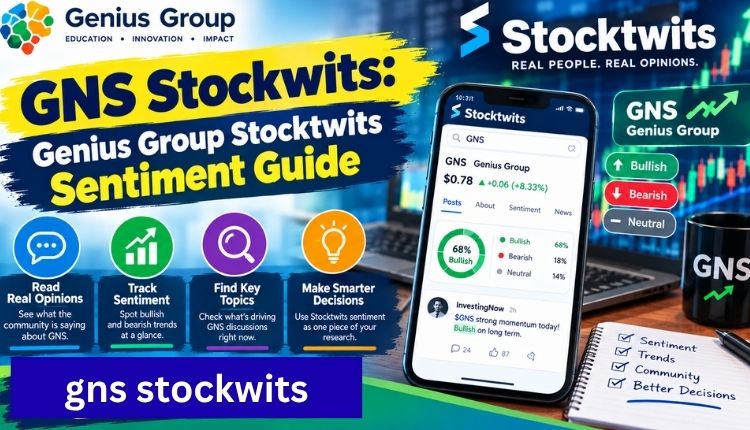
- Compare against similar situations: Other OTC names that lost institutional coverage or fell into delinquent-filer status offer a rough playbook for what recovery (or failure to recover) tends to look like. Our breakdown of TRKA’s sentiment shifts on Stocktwits and the GNS sentiment guide both cover small-caps that went through comparable volatility.
Risk Factors Specific to VENG
| Risk | Why It Matters |
| Delinquent filings | Makes fundamental valuation nearly impossible until resolved |
| Expert Market status | Can restrict which brokers allow trading, reducing liquidity further |
| Sub-penny pricing | Percentage swings look dramatic but reflect tiny absolute moves |
| Reverse split history | Signals prior attempts to manage share price optics |
| No institutional coverage | No consensus check on management’s own claims |
Tracking VENG the Right Way
Skip the automated forecast widgets and go to primary sources instead:
- OTC Markets disclosure page for VENG, to confirm current filing and tier status.
- SEC EDGAR for any filings the company has actually submitted, including the referenced administrative proceeding.
- A live broker quote, since third-party aggregator sites can lag by days or show conflicting “delisted” versus “active” labels.
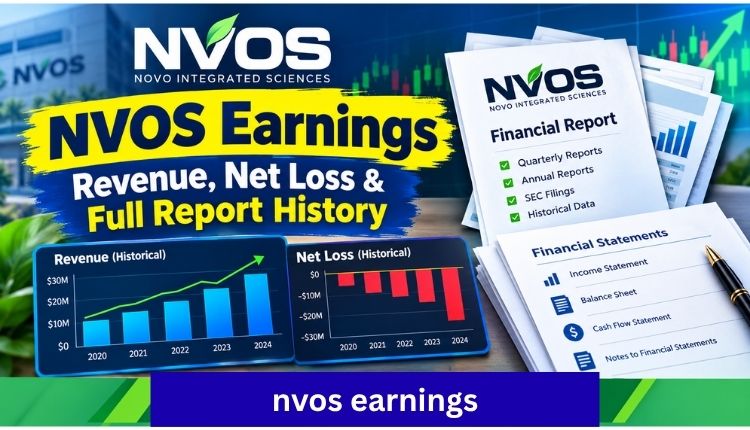
If you’re comparing VENG against other small-cap names in this space, our coverage of NVOS stock and Novo Integrated Sciences walks through a similarly volatile ticker with more available filing history, which makes it a useful reference point for how a small-cap with better disclosure looks by comparison.
FAQs
Does VENG stock have an official analyst price target?
No. As of now, no major research firm publishes a consensus 12-month price target for VENG. Any specific number you see online is typically an automated estimate, not analyst research.
Why did VENG stock drop so much?
The stock’s decline tracks a combination of thin liquidity, a reverse stock split, an OTC Markets “Caveat Emptor” designation, and delinquent SEC financial filings. Any one of these can pressure a micro-cap; together, they’ve pushed VENG into sub-penny territory.
Is VENG still trading?
Depends on the source. Some data providers list it as delisted or moved to the Expert Market, which limits quoting. Others still show occasional OTC Pink trades. Check OTC Markets directly for the current status before assuming either way.
Is VENG a good buy right now?
This article isn’t financial advice, and the missing filings and inconsistent trading status make VENG a genuinely difficult stock to evaluate. If you’re considering it, verify current SEC filings and OTC Markets status first, and size any position accordingly.
What happened to Vision Hydrogen Corporation?
Vision Hydrogen Corporation rebranded to Vision Energy Corporation and changed its ticker from VIHD to VENG in December 2022. It’s the same underlying company.
Conclusion
The honest answer to “what’s the VENG stock price target” is that there isn’t one worth trusting right now. No institutional analysts cover it, the company’s SEC filings are delinquent, and even its listing status is disputed across data providers. Rather than chasing a fabricated number, check the company’s actual OTC Markets and SEC EDGAR pages, understand the dilution and liquidity risks specific to sub-penny stocks, and treat any forecast tool’s output with real skepticism.
For more coverage of small-cap and OTC stocks with similar volatility, browse our NVOS analysis or check the About Us page to learn more about how we research these names.